Do Flowers Need Sunlight in a Vase? Debunking Myths
TJ Flowers NYCShare
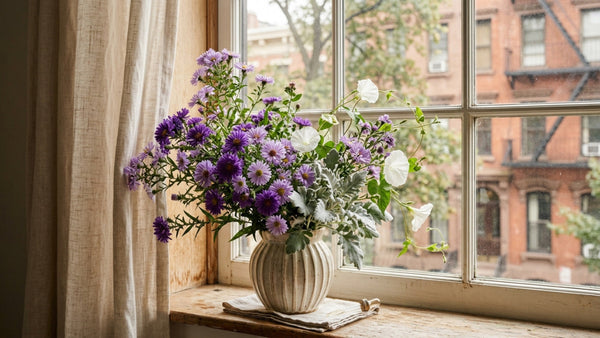
Every week at our Manhattan studio, at least one client tells us they've placed their fresh arrangement on a sunny windowsill "so the flowers get light." It's one of the most common — and most damaging — myths in flower care. Cut flowers and potted plants are fundamentally different things, and the rules for one are almost exactly wrong for the other. If you've ever wondered why your roses wilted in three days while your neighbor's lasted two weeks, the answer is often hiding in a single sunbeam. At TJ Flowers, we've delivered to thousands of NYC apartments, and we can usually predict a bouquet's vase life by where the client plans to put it. Here's the truth about cut flowers and light — plus the other care myths we debunk daily.
Skip the guesswork — let our florists arrange it for you
Hand-arranged at our York Avenue studio · Same-day delivery across Manhattan by 7 PM
Shop best-selling bouquets →The Short Answer (For Featured Snippets)
No, cut flowers do not need sunlight in a vase — and direct sun will actually shorten their vase life by 30-50%. Cut flowers have no roots to feed, so photosynthesis is no longer powering their survival. What shortens their life is heat, evaporation, and bacterial growth, all of which sunlight accelerates. The ideal placement is a cool, shaded spot with indirect light, away from windows, radiators, and kitchen appliances. This rule is the single biggest vase-life factor most people get wrong.
Why the "Flowers Need Sunlight" Myth Exists
The confusion is understandable. Every houseplant guide on the internet stresses the importance of light — because living potted plants photosynthesize through their leaves, converting light into sugars that the roots transport to the rest of the plant. Cut a flower from that system, and the entire energy equation changes. There are no roots. There is no long-term energy need. The only job of a cut stem is to stay hydrated and open gracefully on stored reserves.
This is why florists store cut flowers in dim, cold coolers — not bright greenhouses. Light does nothing positive for a cut flower and quite a bit of negative. The sooner you stop treating your bouquet like a houseplant, the longer it will last.
What Sunlight Actually Does to Cut Flowers
Direct sunlight causes four distinct types of damage, all operating at once. First, it raises petal temperature, which accelerates the metabolic breakdown of the flower — roses respire at roughly 2x speed for every 18°F increase in ambient temperature. Second, it evaporates water from the petals faster than the stem can replace it, which is why sunlit flowers look "tired" by afternoon. Third, the warm water in the vase becomes a bacterial incubator, clogging the stems' vascular tissue from the bottom up. Fourth, UV exposure breaks down the pigment molecules that give flowers their color; this is why red roses "brown out" around the edges in a sunny window.
We once ran an informal test at the studio: identical bouquets, one on a south-facing windowsill, one in a dim corner of the same apartment. The sunlit bouquet was visibly wilting at day three; the shaded bouquet was crisp at day seven. Same water, same arrangement, same cut. Light was the only variable.
Myth #2: "More Water Is Better Water"
People tend to fill vases to the brim, believing that more water equals more hydration. In reality, most cut flowers draw water through the bottom two or three inches of their stems. The rest of the submerged stem just sits there, softening and rotting the leaves that got trapped below the waterline. Those rotting leaves feed bacteria, which then clog the stem tips.
The correct water level is enough to cover the bottom third of the stems — typically 3 to 5 inches in a standard vase. Strip any foliage that would sit underwater. Change the water every 2 to 3 days, not when it "looks dirty" (by that point, bacteria have already colonized the stems). For detailed care rhythms, see our guide on extending vase life in NYC apartments.
Myth #3: "Adding a Penny Keeps Flowers Fresh"
The copper-in-the-vase trick is folk wisdom that doesn't survive modern plumbing. The theory is that copper ions act as an antimicrobial, slowing bacterial growth. Two problems: (1) modern U.S. pennies have been mostly zinc since 1982, not copper, and (2) even pure copper pennies release so little ionic copper into a vase of water that the effect is negligible before the flowers are already fading.
The other popular DIY tricks — aspirin, sugar, vodka, bleach — are a mixed bag. A drop of bleach (1/4 teaspoon per liter) does genuinely slow bacterial growth and is worth doing. Sugar gives stems a small energy boost. Aspirin and vodka are unproven and not recommended. Commercial flower food, which includes an antimicrobial, a biocide, and a measured sugar dose, outperforms all of the DIY tricks and costs almost nothing.
Myth #4: "Misting the Petals Keeps Them Fresh"
This one is half true and half wrong. Misting the foliage of certain flowers (hydrangeas especially) genuinely helps, because hydrangeas drink water through their leaves as well as their stems. But misting the petals of roses, peonies, lilies, or orchids encourages botrytis — a grey-mould fungus that spreads in damp petal crevices and causes brown spots, petal drop, and total collapse within 48 hours.
Rule of thumb: if the flower has big, leathery leaves (hydrangea, eucalyptus), a light mist on the foliage helps. If it's a delicate petal flower (roses, peonies, orchids, lilies), keep the spray bottle away.
Myth #5: "All Flowers Need the Same Care"
Perhaps the biggest meta-myth. Roses want cool water, orchids want tepid, and tulips actually prefer very cold water with no flower food at all. Woody-stemmed flowers (lilacs, hydrangeas, roses) benefit from a crushed or split stem bottom to increase water uptake; soft-stemmed flowers (tulips, daffodils) do not and actually lose vase life from the same treatment.
Mixed bouquets are a compromise — everyone gets "average" care. If you've invested in a premium flower like peonies or orchids, consider displaying them separately so you can give them the specific treatment they want. Our peony collection and orchid collection both come with variety-specific care cards, which we hand-write based on the exact stems in your order.
Order in NYC: Upper East Side florist · Same-day flower delivery Manhattan · Luxury florist NYC
Frequently Asked Questions
Where is the best place to put a vase of flowers?
A shaded spot with indirect light, cool temperature (ideally 65–72°F), away from windows, radiators, AC vents, and the kitchen. A dining-room sideboard or living-room coffee table in a stable environment is ideal.
Will flowers last longer in a dark room?
Yes, they will — a completely dark closet is actually a great overnight storage spot for holding flowers before a dinner party, if your fridge is full of ethylene-releasing produce.
Should I move my flowers at night?
If the room is warm, moving them to a cooler, darker spot overnight can add 3–5 days of vase life. This is why restaurants often rotate their table arrangements through a back-of-house cooler.
What kills cut flowers fastest?
In order: bacterial buildup in dirty water, direct sun/heat, ethylene from produce, dehydration from dry stems or low humidity, and cold drafts from AC vents.
Does the type of vase matter?
Yes, a little. Opaque or dark-glass vases slow bacterial growth because bacteria prefer light. Clear vases are fine if you change the water regularly.
The TJ Flowers Take
Treat your cut flowers like chilled wine — cool, shaded, stable — and they will repay you with a full week or more of beauty. Shop our fresh arrangements or contact our team for bespoke designs delivered across NYC.
NYC's trusted florist since 1988, specializing in orchids with 66+ varieties. Located at 1640 York Ave on the Upper East Side, we craft luxury arrangements for weddings, corporate events, and everyday moments. Same-day delivery across Manhattan, Brooklyn, and Queens.
Get Floral Inspiration
Fresh arrangement ideas, care tips, and exclusive offers delivered to your inbox.