Sustainable Flowers NYC: Farm-to-Table Guide
TJ Flowers NYCEighty percent of cut flowers sold in the United States are imported — flown thousands of miles from farms in Colombia, Ecuador, Kenya, and Ethiopia, often grown with pesticides banned domestically, harvested by underpaid workers, and wrapped in single-use plastic. For a growing number of NYC flower lovers, that carbon- and chemistry-heavy supply chain has become impossible to ignore. At TJ Flowers NYC, we've spent the last several years rebuilding our sourcing around local Hudson Valley farms, pesticide-free blooms, foam-free mechanics, and fully compostable packaging. Here's your complete guide to sustainable flowers in NYC — and why it's becoming the new luxury standard.
Shop Same-Day Flowers in NYC
Hand-delivered across Manhattan — order by 1 PM. An Upper East Side florist since 1988.


Skip the guesswork — let our florists arrange it for you
Hand-arranged at our York Avenue studio · Same-day delivery across Manhattan by 7 PM
Shop best-selling bouquets →Why Sustainability Matters in Luxury Florals
A single imported rose bouquet has an estimated carbon footprint of 1.5-3 kg CO2 equivalent — more than a pound of beef. Multiply that across the millions of bouquets delivered in NYC every year, and flowers become a surprisingly heavy industry. Beyond carbon, the hidden costs include:
- Water intensity. Ecuadorian rose farms consume 1-2 gallons of water per stem, in water-stressed regions.
- Pesticide load. Imported flowers are fumigated with chemistry not approved for U.S. agriculture — including substances linked to reproductive harm in workers.
- Floral foam. The green foam used in traditional arrangements is non-biodegradable microplastic; a single brick can shed plastic for centuries.
- Cold-chain energy. Refrigerated air cargo from Bogotá to JFK is one of the most energy-intensive forms of food transport.
For luxury consumers, sustainable florals are no longer a fringe preference — they're part of what defines "luxury" in 2026.
Local Hudson Valley Farms TJ Flowers Sources From
Within 120 miles of Manhattan, the Hudson Valley and New Jersey coastal plains host some of the most sophisticated flower farms in the Northeast. These farms grow in season, use regenerative practices, and deliver weekly to NYC — often within 24 hours of cutting. TJ Flowers works directly with farms including:
- Hudson Valley Seed flower fields (Accord, NY) — seasonal zinnias, dahlias, celosia, and amaranthus.
- Three Wells Farm (Milan, NY) — peonies, ranunculus, and heirloom varietals.
- Rock Steady Farm (Millerton, NY) — worker-owned queer- and BIPOC-led cooperative growing dahlias, sunflowers, and sweet peas.
- Philia Farm (Ancram, NY) — certified organic cut flowers and foliage.
- Jersey Shore growers (Cream Ridge and Pemberton, NJ) — hydrangeas, tulips (spring), and pumpkin-season foliage.
During peak season (May through October), up to 80% of our arrangements contain locally grown stems. In winter months, we supplement with domestic California and Florida farms and a small selection of ethically certified imports from Sun Valley Floral Farms.
Seasonal Blooms: What's in Season in NYC Right Now
Eating seasonally is a familiar idea; buying flowers seasonally is newer. But seasonal flowers are fresher, last longer, and cost less at peak. The NYC-area seasonal calendar:
- Spring (March-May): Tulips, daffodils, ranunculus, anemones, hellebore, lilac, peonies (late May).
- Summer (June-August): Dahlias (late summer), zinnias, sunflowers, hydrangeas, lisianthus, cosmos, garden roses.
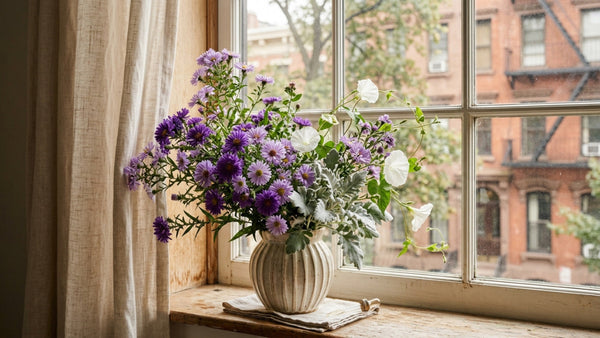
- Fall (September-November): Dahlias (continued), chrysanthemums, celosia, amaranthus, asters, seeded eucalyptus, dried grasses.
- Winter (December-February): Amaryllis, paperwhites, hellebores, anemones, ranunculus, plus domestic-grown roses.
When you order from TJ Flowers, ask for our "seasonal designer's choice" — you'll get whatever's most beautiful that week from local farms.
Pesticide-Free, Foam-Free, and Fully Compostable
TJ Flowers is committed to three practices that most NYC florists still don't follow:
- Pesticide-free or low-spray sourcing. We prioritize certified organic and "naturally grown" Northeast farms. Ask our team for a specific certification profile for any event.
- Foam-free mechanics. Every arrangement is built on chicken wire, reusable kenzan pin frogs, or water-soaked moss — never floral foam. This means arrangements last just as long, with no microplastic waste.
- Compostable wraps and fully recyclable vases. Our wrapped bouquets use kraft paper and natural twine; our vase arrangements use recyclable glass; our event installations reuse ceramic and metal vessels that we bring back after the event.
Why Sustainable Florals Look Different (and Better)
Sustainable arrangements have a distinctive aesthetic. Because we're working with what's in season, what's local, and what farms are cutting that week, our designs tend toward:
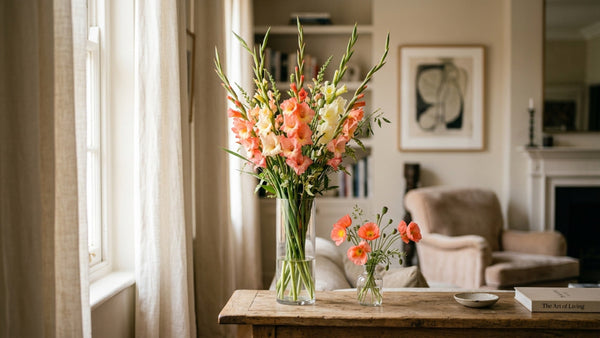
- Looser, more naturalistic compositions — less rigid geometry
- More foliage and textural variety — grasses, herbs, branches
- A wider palette of flower shapes — not just roses and lilies
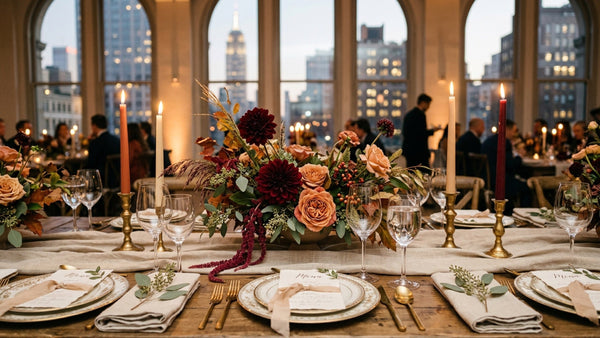
- Seasonal color stories — peach and coral in summer, rust and plum in autumn
- Individual stem character — a single dahlia that wasn't selected for uniformity often has more personality than ten greenhouse roses
This is the editorial, garden-style aesthetic that's defining luxury weddings, magazine editorials, and design-forward brands in 2026.
How to Order Sustainably from TJ Flowers
When placing an order, specify any of the following:
- "Local and seasonal only" — we'll build from current-week Hudson Valley and New Jersey stems
- "Foam-free required" — this is our default, but feel free to confirm
- "Compostable wrap only" — we'll skip cellophane and ribbon in favor of kraft paper and twine
- "No imported flowers" — limits us to domestic, which is feasible April-November
For more, browse our seasonal arrangements collection, our luxury arrangements, or read about our sourcing practices on our delivery and sourcing page. For event planners, our corporate and event florals page details our sustainable event program including vase return logistics.
Order in NYC: Upper East Side florist · Same-day flower delivery Manhattan · Luxury florist NYC
Frequently Asked Questions
Are sustainable flowers more expensive?
At peak season (May-October), locally grown sustainable flowers are often the same price or less than imports. In winter, domestic-only arrangements can cost 15-25% more due to limited supply — but the trade-off is longer vase life and lower environmental impact.
How can I tell if a florist is genuinely sustainable?
Ask three questions: (1) Do you use floral foam? (2) Where were these flowers grown? (3) What percentage of your inventory is domestically grown? Florists with real sustainability practices will answer specifically, not vaguely.
Do sustainable flowers last as long?
Locally grown flowers often last longer because they're cut 24-72 hours before delivery, rather than 7-14 days for imports. A locally grown dahlia or lisianthus can last 10+ days in a vase.
Can I get sustainable arrangements for a large event?
Yes. TJ Flowers has dedicated event inventory from Hudson Valley and New Jersey farms. For weddings and corporate events over 50 guests, we recommend booking 8-12 weeks in advance so we can reserve farm allocation.
What should I do with flowers after they fade?
Compost them. NYC residents can use their building's organics bin or drop off at a GrowNYC compost site. Our kraft paper wraps and twine can go in the same bin.
Beautiful, local, and kind to the planet. Browse our seasonal sustainable arrangements or contact TJ Flowers NYC for custom, farm-to-table florals. Luxury without compromise.